P2P: Creative Peer 2 Peer Meetups
Our new regular meetup, bringing together artists working across various digital practices - a social space to share ideas, get honest feedback, learn from peers, discover collaborators, and connect with a community of fellow artists. Participants have the chance to present finished projects or works in progress, showcased on the large LED wall at our virtual production studio,
Alt_R.
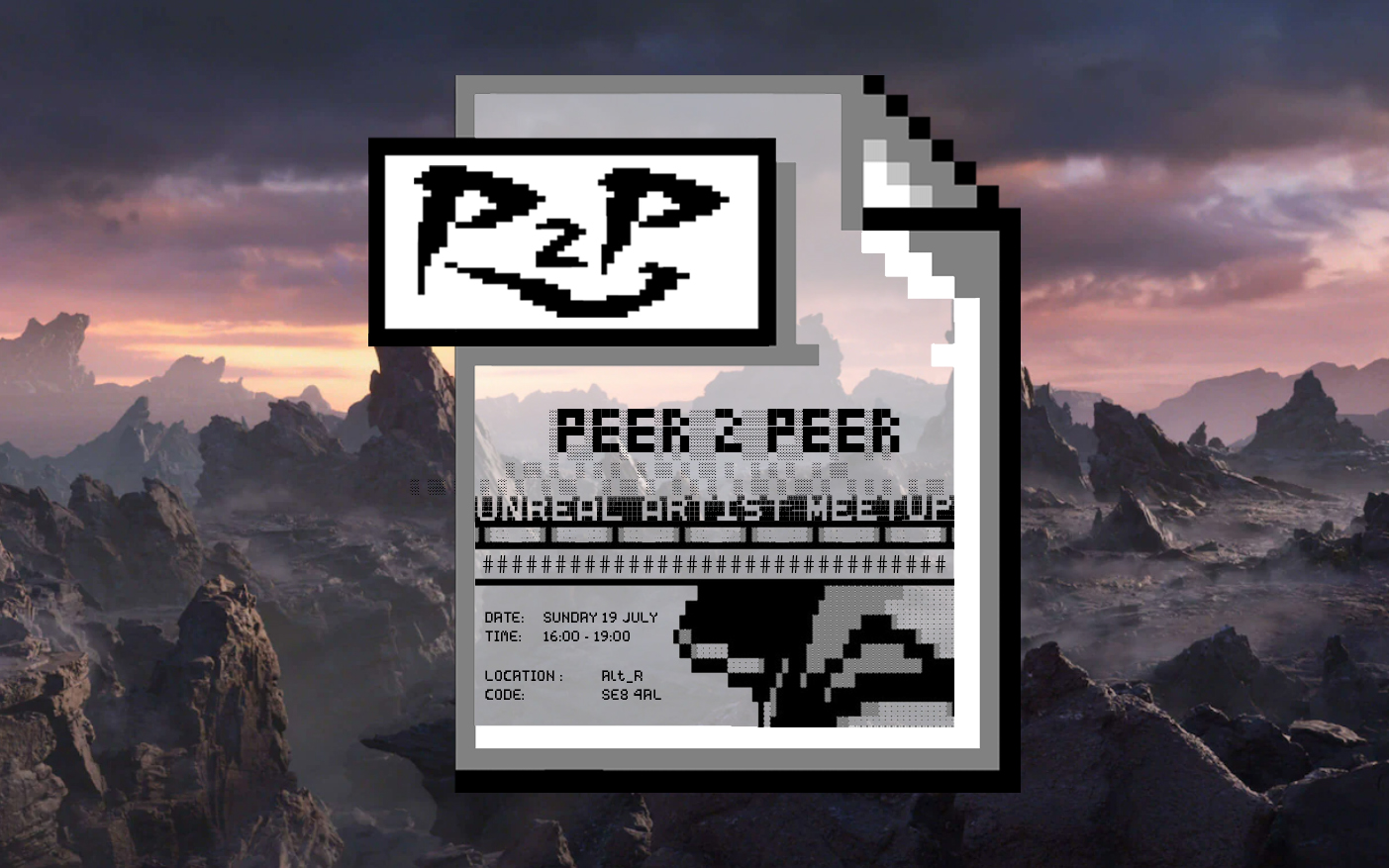 P2P: Unreal Artist Meetup #1
19 July 2026, Alt_R
The first P2P event of the year brought together visual artists using 𝗨𝗻𝗿𝗲𝗮𝗹 𝗘𝗻𝗴𝗶𝗻𝗲. Below are the artists and projects presented at the meetup, with presentations selected at random for the chance to show their work during the event.
Kaweewat Chanchitfa / Jui
Whimsical House, 2026
Physical and digital interactive installation
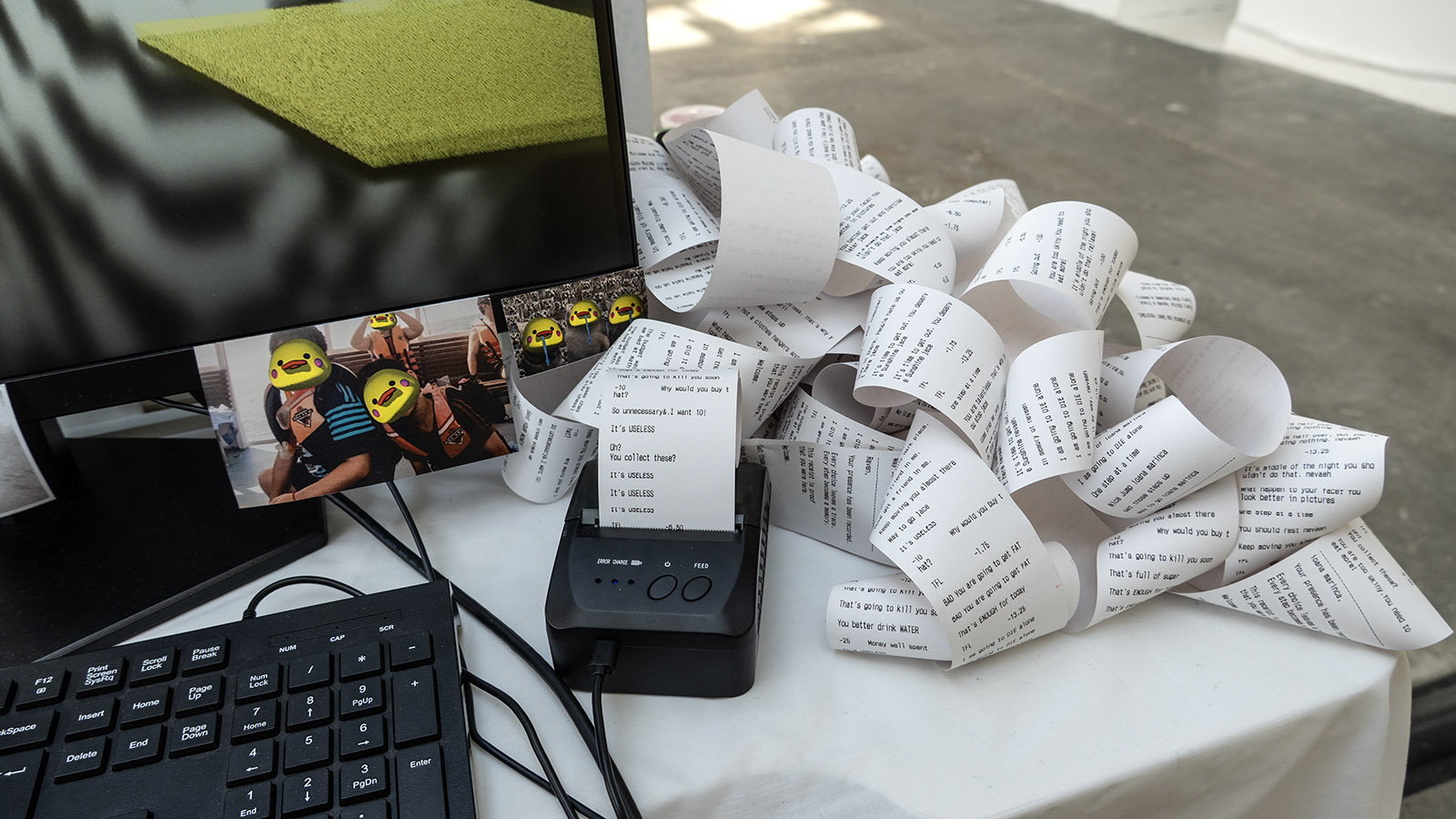
The work combines physical and digital interactive experiences. It explores themes of happiness, body dysmorphia, depression, ADHD, and the regretful inner voice that often accompanies our actions. I use games as an interactive medium to create immersive, world-building experiences that blend sorrowful, playfulness, and whimsy. The idea of using a receipt printer comes from the belief that everything we do comes at a cost. Whether it is money, emotional pain, or regret, every action leaves a trace like a receipt documenting what has been spent.
@j.you.i
@kaweewat_jui
Mo Nan
WARM MATRIX, 2026
Single-player video game (Unreal Engine), 10–15 min per playthrough across three environments.
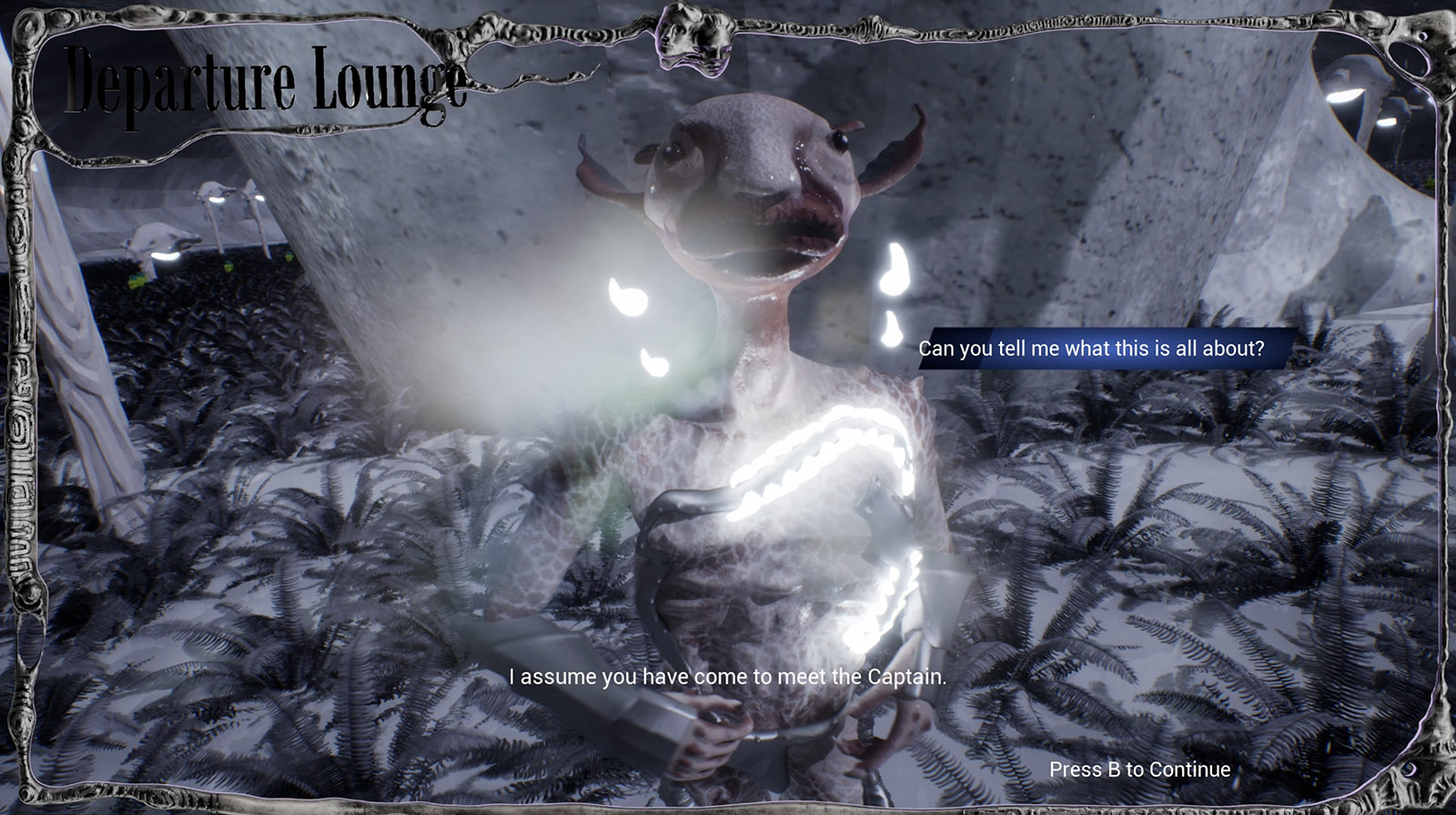
The game moves through the bedroom, the airport, and the warm matrix itself, built from my own digital sculptures, animations and fragment texts. The blobfish is the main game line: I take its own qualities — inside out, violent and fragile, gelatinous, melancholic, and turn them into the figure of a guidance, unsettling simply by being present; through dreamlike jumps between these spaces, the player is invited on a journey into a mix of fantasy nightmare and inner mythology.
@nanmooo_
Phenotypica Art & Science (Ben Murray & Neus Torres Tamarit)
Agonism / Antagonism: Coupling, Agonism / Antagonism: De-coupling, Stem Cell Pachinko
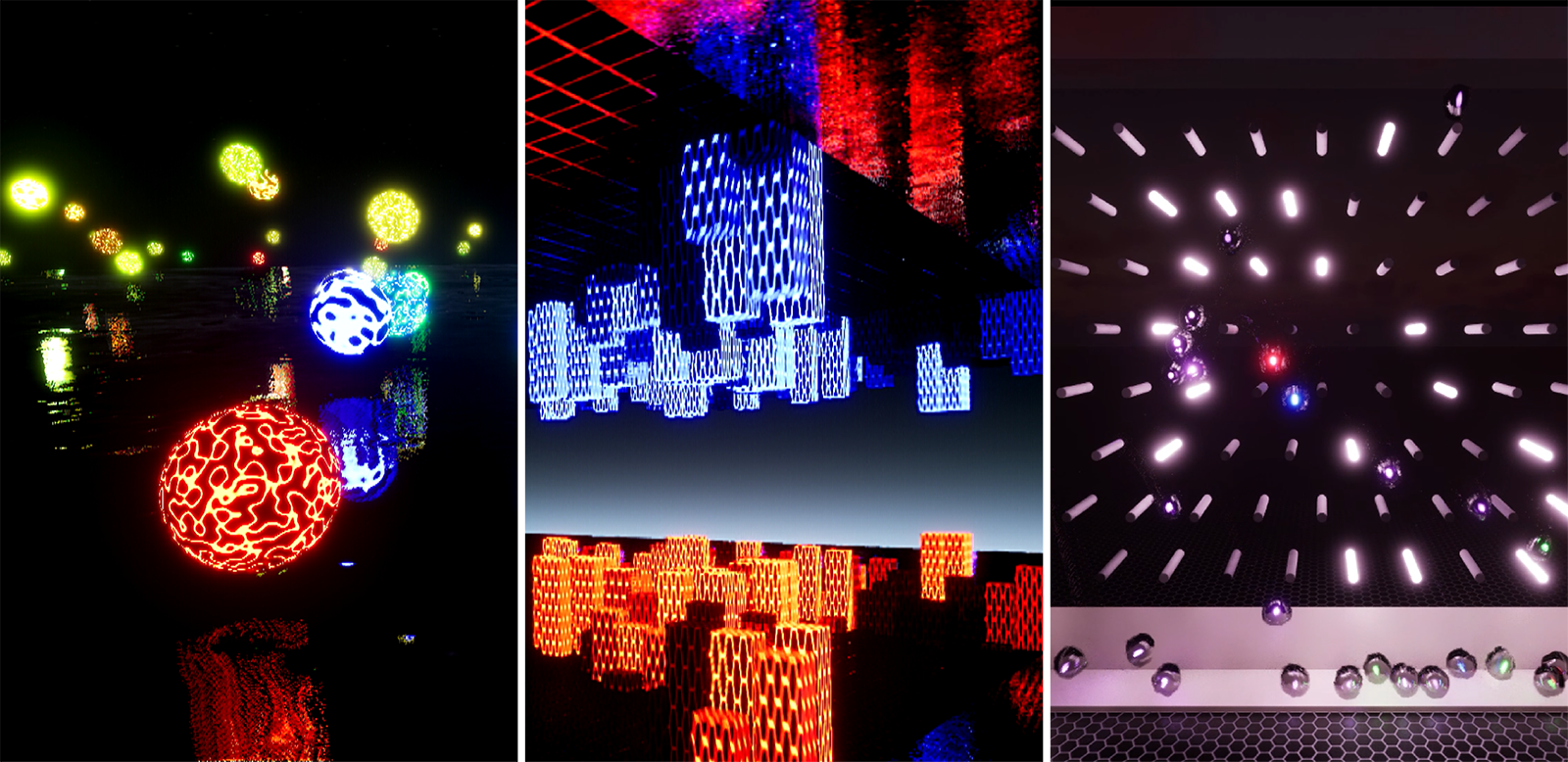
Agonism / Antagonism: Coupling and De-coupling
Genetic antagonism is a tug-of-war written into the genome: a variant of a gene that benefits some members of a species while being costly to others, so that neither outcome can win outright. Prof. Max Reuter's lab studies this mechanism using the fruit fly (Drosophila melanogaster) as a model organism.
Agonism is a strand of political theory, drawing on the Greek agon: the contest, that treats conflict not as a failure of politics but as necessary to it. We took this as a metaphor for genetic antagonism: a tug-of-war that cannot be resolved in any sexually reproducing species, and whose very persistence we read as productive rather than merely costly.
Coupling and De-coupling are two virtual reality artworks that let the viewer interact with these antagonistic dynamics, at the level of the species in Coupling, and at the level of the cell in De-coupling.
In Coupling, the viewer puts on the goggles and is immersed in an environment where organisms of a single species move in flocking behaviour. Each carries its own genetic material, visible in its surface patterns and colours, and the environment's heat and humidity can be altered. The viewer can teleport around, select two organisms, mate them, and watch the offspring born with the parents' genetic material recombined.
In De-coupling, the viewer is immersed in an environment of two planes, each standing for the inside of a cell. Inspired by Conway's Game of Life, a cellular automaton in which simple rules generate unpredictable complexity, the two panels begin synchronised. The viewer inserts mutations and watches them de-couple as complexity unfolds.
Developed during artist Neus Torres Tamarit's residency in the laboratory of Prof. Max Reuter, Research Department of Genetics, Evolution and Environment, UCL, and part of a long-term collaboration with computer scientist Ben Murray as Phenotypica.
Stem Cell Pachinko
Stem Cell Pachinko is a two-screen video: a pachinko game on the left, a 3D illustration of a stem cell on the right. Stem cells fall from the top and, depending on how they strike each pin and which way they fall, they divide into a specialised cell, divide into another stem cell, or don't divide at all. The work draws on how stem cells divide in the body and on research using organoids: miniature, simplified organs grown in the lab from stem cells.
Developed as part of the art and science partnership with WORC.Community.
phenotypica.org/projects/agonism_antagonism
phenotypica.org/projects/stem_cell_pachinko
Maximilian Prag
Bond of Life, 2026
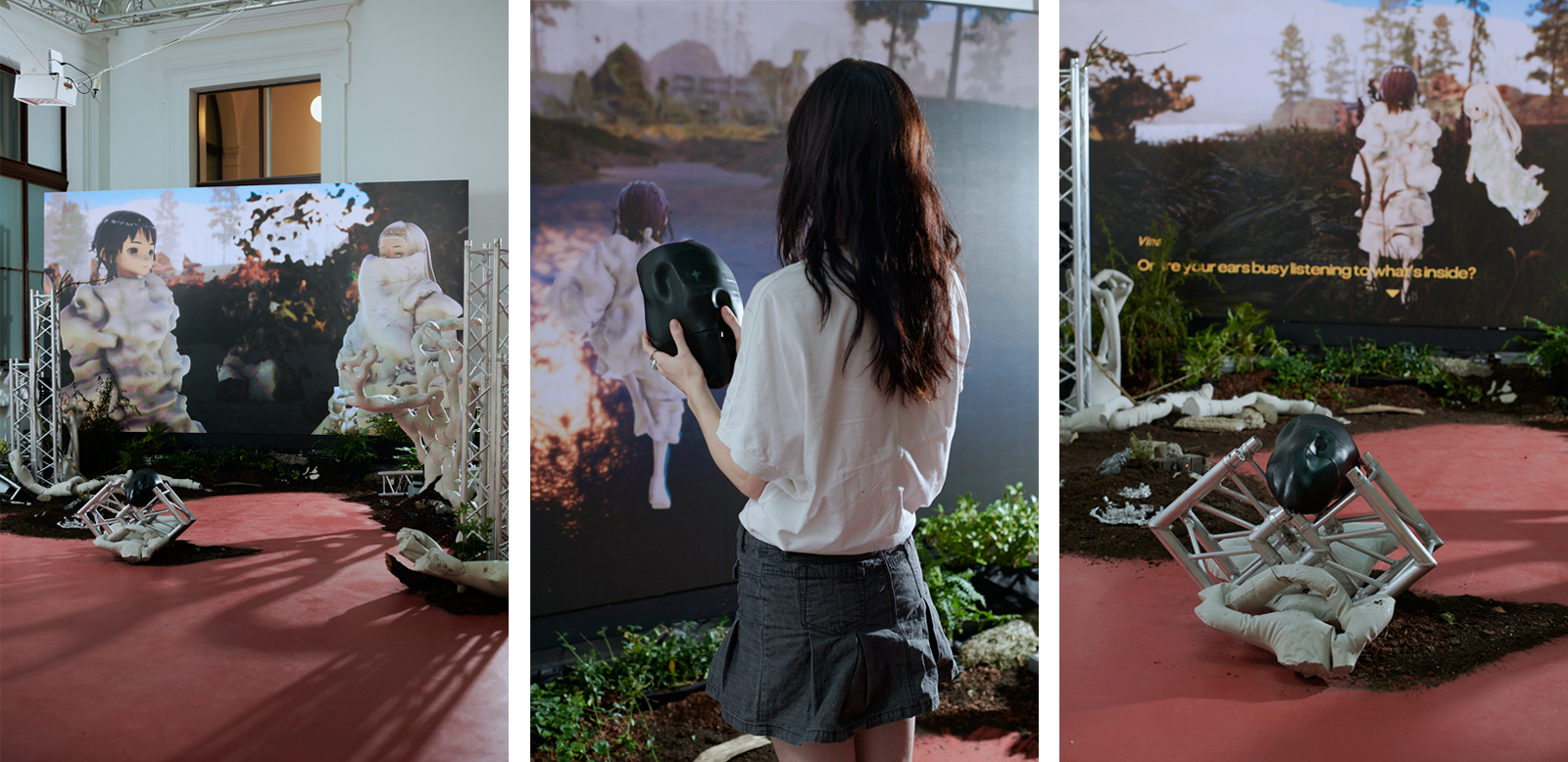
Bond of Life is a hybrid fantasy roleplaying video game installation set in a speculative post-anthropocenic mytho-tech-archeological future. The game is inspired by fictional narratives decentering the human as the only intelligent being and imagining a world of making kin. In a post-anthropocentric setting, the player experiences intelligence as an entangled mesh and performs actions of multispecies kinship within a framework of interlinked stories. Agency is shifted through gameplay, dialogue and interaction. Reconnecting and acknowledging to nonhuman beings becomes both gameplay and thematic message. By using a hybrid format the video game transcends the fictional boundary of the screen and manifests itself in physical space.
maximilianprag.com/bond-of-life-2025
Solveig Settemsdal
There's Only Sky, 2024
Full HD video, 05:42 mins
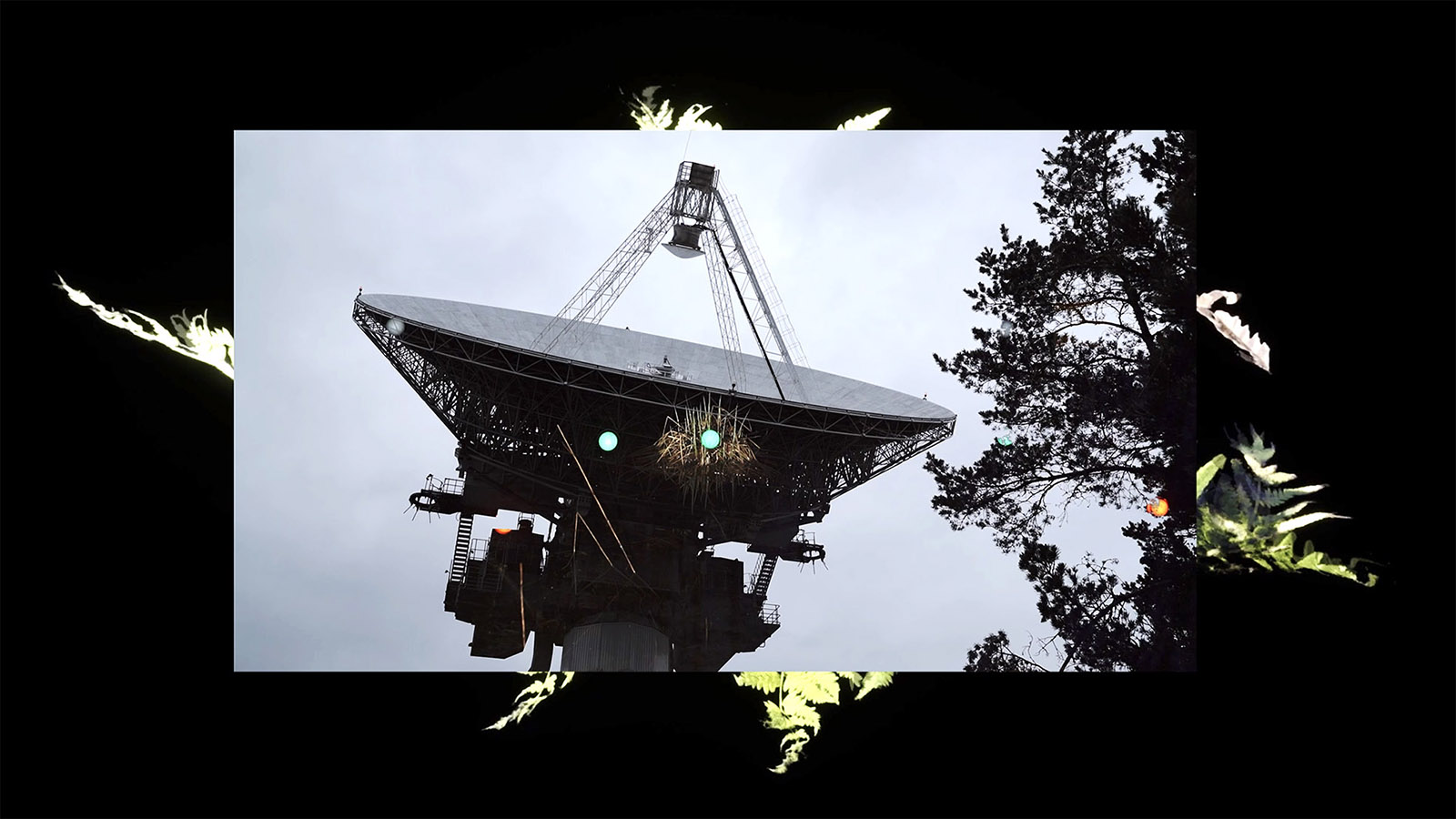
This split-screen video essay emerged from my RIXC Center For New Media Culture residency in Riga, where learning Unreal Engine intersected with exploring Soviet radio astronomy architecture. The work weaves transcripts from an Unreal Engine workshop at Arebyte Gallery with footage captured at the Ventspils International Radio Astronomy Center in Irbene, Latvia.
New security protocols at the operating facility—possibly military, responding to the developing situation in Russia—transformed the project unexpectedly. My planned week of filming at the site, reached via wintery forest dirt roads kept deliberately without signal, was compressed into a few hours of recording in the rain, my polka dot umbrella held over the camera by one of the station's stoic lighthouse keepers. The giant red star at the gates was shut, and the work shifted direction entirely, becoming about frustration, impossibilities and strange ceiling lamps as much as cosmic reception.
Rain hitting the decommissioned radio dish forms the soundtrack—each droplet a physical proxy for gathering signals from space. Central to the piece is an accelerating digital fern that splits and fragments across the screen. Ferns, originating 400 million years ago, here bridge ancient organic processes and contemporary digital manipulation.
The work investigates how learning complex technologies mirrors our attempts to decode natural phenomena. Layers of reality and unreality intertwine through liquid interpretations of radio reception, with simulated physics questioning our mediated relationship with both cosmic and earthbound environments—finding poetry in the impossibility of fully grasping either.
settemsdal.com/theresonlysky
Song Xin
Hypersensitivity, 2025–2026
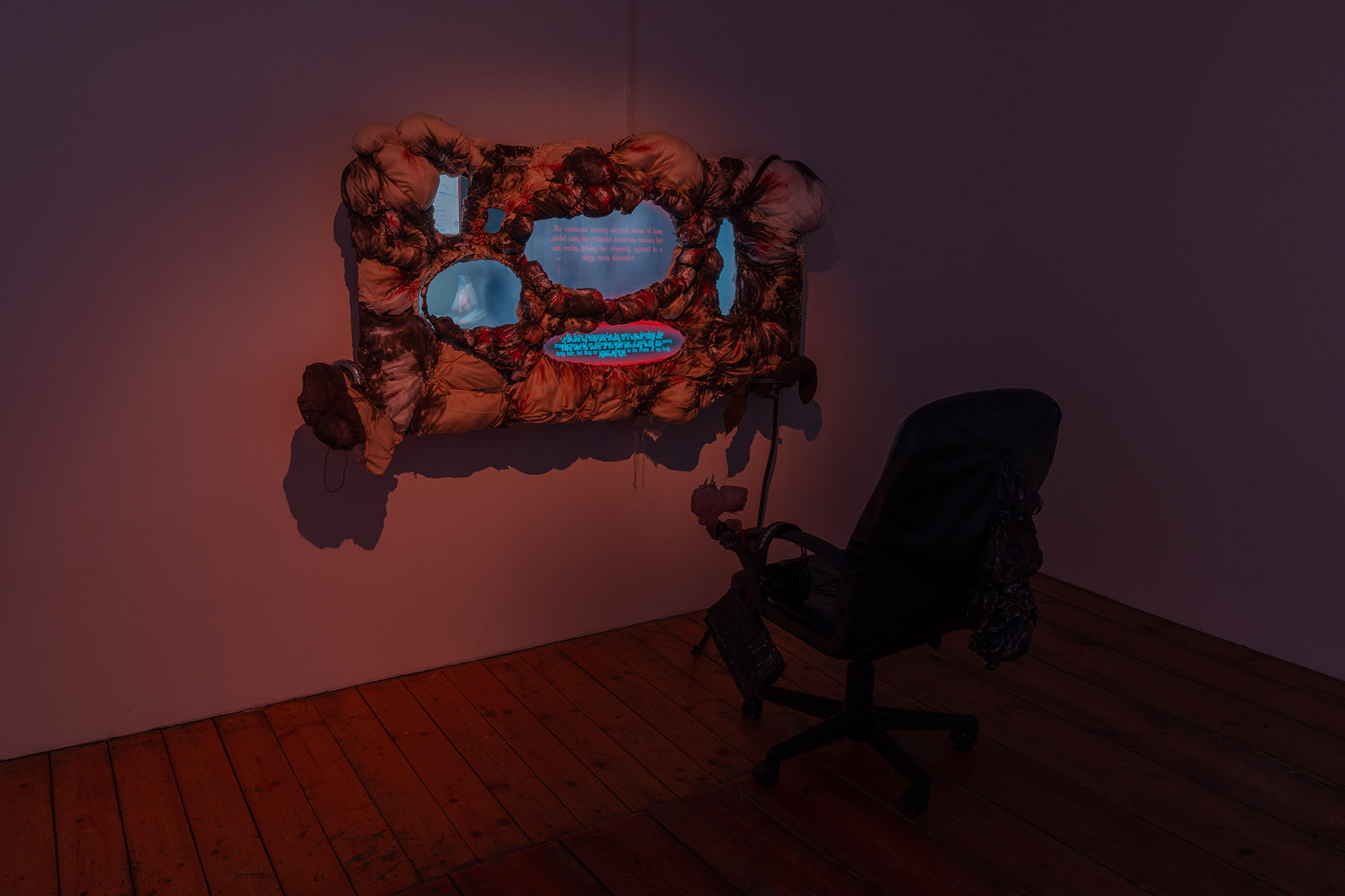
Hypersensitivity began as a video game project and later expanded into video installation and performance. Combining footage of movement through the city with game footage, it explores how electronic devices, environmental data, and virtual spaces affect the way bodily sensations are understood.
Diagnosis is treated as an ongoing process. Heart rate, humidity, movement, and air pressure shape how sensations are interpreted and described, connecting bodily experience with external data and virtual space.
Test gameplay developed in collaboration with @g_micah_kuhn
Sound design by @yikii_tong
UI illustrations for the test gameplay by @kimkimjongun
songxin.site/Hypersensitivity.html